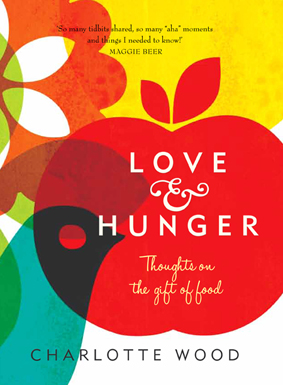
Matt Condon speaks to Charlotte Wood, author of Pieces of a Girl.
Tell us about your life and times.
I grew up in Cooma, where my dad worked for the Snowy Mountains Authority. I come from a big family, went to the local Catholic and state schools, did a cadetship on the local paper and then later moved away to study journalism at Bathurst before moving to Sydney.
Have you always wanted to write fiction?
Probably, although without realising it. I always loved words and reading but never entertained the thought of writing a novel until about four years ago because I thought you needed "An Idea For A Novel". It wasn't until studying with the author Sue Woolfe that I realised many writers begin with very little, if any, idea of what they'll end up with.
Tell us about how Pieces of a Girl came about.
It started from one line that started echoing in my head: "A good mother turned dangerous." I knew it was important for me not just because of what it said but from its tone, from the "voice" of it. So, I had this voice and a vague sense of a mother who was somehow ominous and threatening to her child. After that, the first images to come were some little scraps of images of the mother, viewed through her child's eyes; like the way she walked or her laugh and the fact that to the child, she was sort of mesmerising and menacing at the same time.
It sounds very personal. Is it?
It's not about my life. None of the events in the book happened to me and the people are not based on anyone I've known, which is important to say only because I worry that people will think my parents, who are both now dead, were like June in the book! But, of course, a person's life experience shapes their creativity and the places you live and images you see and the people you know seep into your writing.
What are some of the highs and lows of writing a first novel?
Like a lot of people, I write in an instinctive and messy way. I had scenes all over the place, scenes from near the end when I'd only just started and the story hadn't come yet and I didn't even know what these images were about or for. I had ideas that just kept pulling at me for what at the time seemed to be no good reason. The lows were the anxiety of learning to trust that instinct of waiting for things to fall into place. I hope not to be as disorderly the next time around but I don't know if I will be able to work any other way.
The highs? Finishing! And coming up with a good image. I find that very satisfying.
What did you learn that you would pass on as advice to others?
I would say new writers need to take their work seriously and I would emphasise writing slowly because sometimes the deeper layers of what you're writing about only become apparent after writing for a long time. I also think contact with good writers - through writing classes, mentorships and writing organisations - is really important and did a lot for me.
Tell us about the creation of the major characters.
June, the mother, and Ivy developed from the first line I mentioned before. Victor turned up just as he comes in the book - rummaging in their letterbox when they come walking home from school. I needed Victor to crash into their lives a bit because I had only the mother and child, and all these quietly menacing but fairly inactive scenes with nothing to collide into them. I don't know what to say about Linford. I do remember someone telling me about a research trip (she told me later that I misheard this) where the researchers who were going out into the Indonesian wilderness for long periods bought their books by the kilo. Obviously, she meant they had to weigh them to see how many they could take but it had stuck in my head and I started to wonder what kind of a person would buy novels by the kilo. And I enjoyed loathing Linford, even though he can be a bit over the top.
There is a fascination with anatomy in the book.
Again, it has to do with surfaces and interiors and what lies beneath the surface of things. This has a personal meaning for me because my parents both had cancer and with each of them, there was this period before diagnosis when you knew something was wrong but not how bad it really was - things looked fine but were very bad indeed "beneath the skin". Through both their treatments, we were presented with all these images - X-rays, scans and so forth - and strangely, while what they mean is very terrible, they can sometimes actually look quite beautiful. As well, I suppose I'd also seen a lot of anatomical photographs in the medical/health journalism I'd done and the polarity between their presentation as impersonal, scientific, clinical images and the fact that these are pictures of a human being with a name, family and emotions and memories, always seemed strange and quite sad to me.
Tell us about the landscapes in the novel.
It's set largely in Marrickville, in the inner west of Sydney around where I live. But it also moves to a house by the beach, with that lovely hot Australian summery feel, and my old home landscape of the Monaro and the Snowy Mountains also gets a brief look-in.
Have you written a novel that is the type of literature you like to read?
I've tried but not succeeded, really - maybe that's why writers do it, keep writing till they think they've written a book they'd love to read.
Which authors are your biggest influences?
Kate Grenville, Gillian Mears, Robert Drewe, Thea Astley, recently Patrick White.
What themes did you explore in Pieces of a Girl?
The themes only emerged for me on the second or third draft of the book and usually when someone else pointed them out. The big one for me is this idea of malignance, that there is something darker going on beneath the surface of things.
What is your writing regimen?
I would love to be one of those writers who gets up early and writes for four hours a day but being inherently lazy and a great procrastinator as well as doing other work for a living, it's nothing like that. I am quite erratic. I'm trying to write at least every day.
Your book is both lyrical and accessible. Was this intentional?
Not really. I do like fiction that has an edge but especially if it also has a sense of humour, even if it's not consciously "funny". I love rich language and imagery but I worry about it becoming too cloying so I try to leaven it with some sharper or more light-hearted stuff.
© Matt Condon
First published
Sunday Life magazine,
The Sun Herald, November 14, 1999