Sincere thanks to Wendy James for allowing us to reproduce this essay, first published in Australian Literary Review, May 2010.
Learn more about Wendy and her books here.
Standing too close
 ONE of my earliest memories is of being asked to move out of my sister's light.
At three-and-a-half I am an indulged only child, only grandchild, great-grandchild, niece, and until this moment I've never had to share any light, or anything, for that matter, with anyone. But now my secure little world is to be set upside down: I have a sister.
Late last year this same little sister, Rebecca James, became a publishing sensation when her thriller, Beautiful Malice, was auctioned in the US and Germany for vast sums, going on to sell in numerous territories for more than $1 million. On hearing the news of my sister's phenomenal success first-hand I wept. And my tears were not shed out of an excess of sisterly pride, delight in her good fortune, but out of some obscure, but painfully sharp, sense of humiliation. Why her book and not mine? And what would this mean to my hard-won sense of being a writer, to have my younger sister so conspicuously outshine me? Once again, I'd been forced to give up my place; to share the light, unwillingly.
ALTHOUGH the terms brother and sister, and all their derivatives - brotherly, sisterly, sisterhood, brotherhood - denote a state of not only kinship but accord, actual sibling relationships are rarely straightforwardly positive. Sibling relationships are complex, bonds of affection complicated and sometimes broken by competition and rivalry for resources and attention, for affection.
Relationships between siblings are not often depicted as being easy or harmonious: in the Bible, the works of Shakespeare, myths and fairytales, siblings are frequently in opposition, some are mortal enemies, their success or survival seemingly dependent on the other's downfall: Cain and Abel, Jacob and Esau, Leah and Rachel, Joseph and his brothers; Goneril, Regan and Cordelia, Edmund and Edward in Lear, Richard III and Edward IV, Cinderella. Tales of simple affection and of loyalty undiluted by envy are few and far between (Hans Christian Andersen's The Wild Swans; Hansel and Gretel; Snow White and Rose Red), and even in stories of ostensibly affectionate siblings there is an emphasis on difference, with stark contrasts in looks or personality used to establish separate identities. Think of Mary and Martha in the Gospels, Marianne and Elinor Dashwood, Jane and Elizabeth Bennet, Dorothea and Celia Brooke: dark and fair, good and clever, romantic and practical, smart and simple, the beautiful and the plain.
FEWER than 12 months later my mother arrives home with another squawking bundle: a second sister, Emma. So there are three of us, the youngest two so close in age they are almost twins: an inseparable, impenetrable duo, a force of nature. They take to each other; I take up books.
SISTERHOOD is frequently depicted as a malign, sinister, sometimes destructive force, especially when the sisters appear in groups of three: Macbeth's witches, the three Fates, the Furies, the Sirens, the Gorgons. Most horrifying of all are the Graeae, guardians of the gorgons, crone sisters who are forced to share only a single tooth and an eye. How, I wonder, do they know themselves as separate entities? And how do they tell their own stories?
AFTER finishing school I try nursing for a month or so, momentarily diverted by a latent practical, caring streak, but quickly drop out. I toy with the idea of music for a while but am eventually unable to resist the siren song of literature. I go to university and read. Other things, hard things, big things, happen, but still I read. I have two babies, much earlier than my peers. I work hard at numerous menial jobs to keep our little craft afloat, but still I keep on reading. I think about writing myself, of course, but I’m never quite ready. I am waiting, I realise now, for the secret of writing - permission to tell my own stories - to be revealed.
One day I realise that there is no secret, that the secret is, simply, to write. So I write.
My sisters have other ideas. They too start nursing (as did our mother, our aunt and grandmother), but soon they go their separate ways, as sisters do. They live their own lives: work, travel, study, play. They study English at tertiary level and are enthusiastic readers (as are our parents), but they don't write.
Even though I've won prizes and my stories are consistently published, writing has no obvious rewards. Writing is isolating, poor-making, dull. Writing makes you desperate; gives you bad eyesight, a big arse. Writing is my thing.
After years of running parallel, our lives intersect again, as sisters' lives frequently do, and Rebecca and I somehow wind up in the same place, literally and metaphorically. She moves to Armidale in rural NSW, where my family has recently settled, with her husband and baby son. We both have new babies - her first, my third - and for the first time we have all sorts of things to talk about, to share: children, recipes, walks, opinions, gossip, and most importantly, books.
Then one day Rebecca decides to write about her life in Indonesia, as a way of processing some intense experiences. The writing develops into a story, which naturally she sends to me, her sister, the writer. Her story is good and I tell her so. The structure is clever, the characters real, the writing lucent, the whole compelling.
She takes up reading more seriously now. Novels, stories; books on writing, on how to get published. She has three more children, opens a business, moves house, but she keeps on writing, tries her hand at different genres: domestic dramas, romance, chick lit. "It's good and getting better," I tell her whenever she asks my advice, my opinion. "Just keep writing."
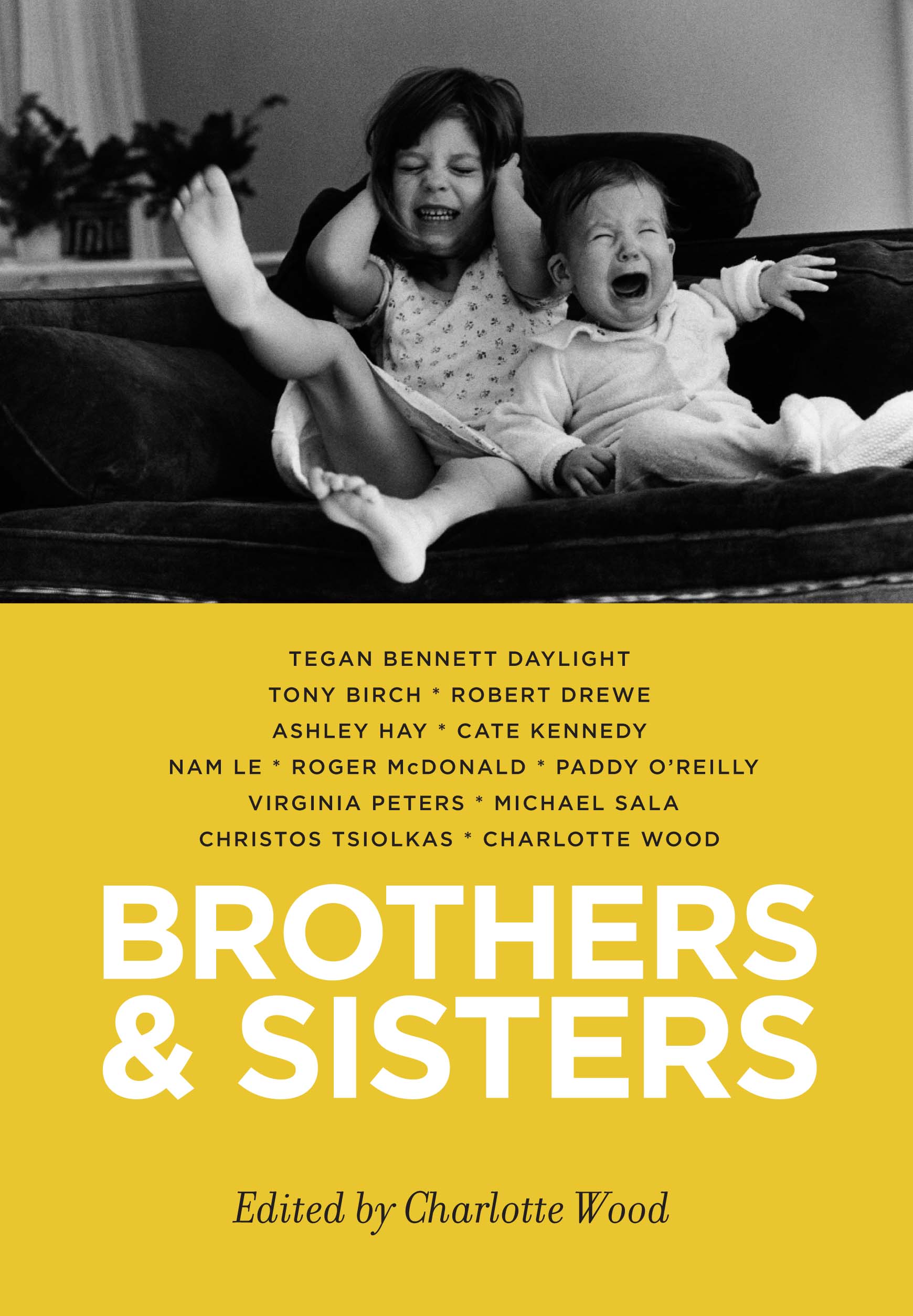
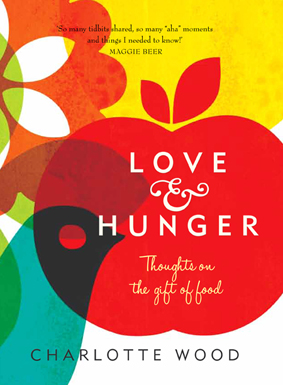
WHETHER or not we define ourselves as being close or distant, bound by blood, or by friendship or both, the relationship between siblings, a relationship imposed and inescapable, forged out of proximity and DNA, is impossibly complex, our feelings for one another frequently confused, equivocal. This ambivalence, characterised by a constant struggle between the self and this sometimes too-close other, is powerfully evoked in many of the stories in Brothers and Sisters (Allen & Unwin), a recent anthology edited by Australian novelist Charlotte Wood.
Each of the 12 stories in the collection offers a highly individual narrative, none easily reducible or typical, each in its own way surprising. All of the pieces deal with sibling conflict of one sort or another: with implicit and explicit power struggles, the battle for parental approval, the difficulties of reconciling love and hatred, of finding a way to balance an instinctive sense of loyalty with the need for individuality and separation.
The urgent desire to forge an identity that is clearly separate to that of a sibling is at the core of many of the narratives. In Cate Kennedy's 'Beads and Shells and Teeth' the protagonist and her sister are, despite their surface acquiescence, "rivals - for favour, for attention, for bitterly contested territories invisible to outsiders". The two sisters are unwillingly twinned, given the same gifts, dressed identically, regarded as inseparable. Distinguished only by the individual colours that have been bestowed on them unasked - one pink, the other blue - the girls' true differences, and similarities, are thereby elided. Their characters, too, are similarly constructed and set, one sister regarded as more sensitive; while the narrator is forced to be cheerful, "the one who you didn't have to worry about, the one who liked blue", though she is, in reality, equally sensitive, suffering agonies of guilt.
Physical differences between siblings, male and female, are commonly regarded as a site of conflict and competition. An emphasis on male strength and physical or sexual prowess runs through many of the stories in the collection that deal with brothers.
In 'The Yarra', Nam Le's extraordinary tale of brotherly loyalty and sacrifice, routine beatings endured by a younger brother in childhood are ultimately paid for in blood. In Paddy O'Reilly's 'One Good Thing', a close friendship is destroyed by the silence and denial that surrounds an elder brother's sexual violence. In 'Like My Father, My Brother', Michael Sala depicts brothers whose relationship with one another is both more intense and more distant because of the sexual abuse suffered by the elder. The younger brother, who has been spared, is envious of his brother's physical resemblance to their absent father. Not fully understanding the damage that has been inflicted because of this resemblance, he sees his brother, who his father loves best, as being more real than himself, more what a man should be, what he aspires to be. He is pleased by any identification with this older, more sexually adept brother, his own adolescent self submerged.
For sisters, too, identity revolves around physical differences and similarities. In Tegan Bennett Daylight's 'Trouble', the protagonist's perceived lack of physical beauty is cause and effect of her social paralysis, and is set in stark contrast to her conventionally pretty and more socially adept sister's professional and romantic success.
Bonds between siblings frequently change with time: children who are close may grow apart as their lives diverge; enmities developed in the cradle inexplicably dissolve, become irrelevant; and occasionally age confers some degree of wisdom. In Brothers and Sisters Charlotte Wood, Christos Tsiolkas, Robert Drewe and Roger McDonald tell of middle-aged and elderly siblings whose relationships undergo late transformations. The relationship between McDonald's protagonist, an ageing shock jock, and his adopted sister evolves in darkly humorous ways; Wood's weary protagonist is forced to recognise that a lifelong assumption of superiority is meaningless against the devastating onslaught of time. In Tsiolkas's wry but affecting 'The Disco at the End of Communism', a long-estranged sibling dies, but an understanding - a spiritual reconciliation of sorts - is still possible. In Drewe's 'Paleface and the Panther', an unexpected reversal sees a much younger brother's uncanny physical resemblance to a long-dead father take on a shocking significance.
It's hard to avoid a faint twinge of envy on reading Ashley Hay's playful, but moving essay on being, and having, an only child: envy for that self who is still ensnared within the maze of a childhood made more complicated by unasked-for siblings, and for my own children, forced to suffer similarly. There is a dark side, though; what happens to the idea of the family if the one, the only, is lost? Hay's mother's tongue-in-cheek response when Ashley asks why she only had one child - that she was worried she might not have enough love to go around - is surely what consumes us all, first as children and then later, as parents, the seeming impossibility of equal dispensation of attention, love, resources, time.
Parents, absent or present, long dead or vividly alive, provide the subterranean current that drives these narratives: whether siblings are forced into solidarity by a hopelessly neglectful, but much-loved mother, as in Tony Birch's heartbreaking tale of a latter-day Hansel and Gretel, 'Blood'; or, like Virginia Peter's uncomprehending heroine and her angry siblings, in 'About the Others', forever divided by a mother's conspicuous favouritism. Parents are, after all, the root, the source of a connection that, however weakened, attenuated or denied, can never be completely broken.
A FRIEND who is well acquainted with my writing is curious about all the fuss, asks if she can read something of Rebecca's. I send her the first chapter, in draft, of Beautiful Malice.
"My god," she writes back, "it's eerie. It sounds so much like you!"
It could just be straightforward influence: Rebecca has read all my novels and stories, has been a generous supporter, has given advice, been a champion of my work. But there's something else at play here too. We don't look alike - I'm dark, she's fair - but our voices (and this goes for the three of us) are virtually indistinguishable. Even our parents confuse us. Surely it's only natural that our writing voices, too, would share certain characteristics - tone, pitch, rhythm - along with certain overlapping preoccupations and observations.
The same things tend to catch our eye, make us laugh. Or cry. Really, it would be more surprising if our writing was completely dissimilar.
My friend sends a second email: "Hey - it's fantastic. Can you send more?"
I feel a pang, a twist, only slight. "You'll have to wait, buy the book," I type back rapidly and with some satisfaction. "It's not mine to send."
THERE'S no escaping the fact writing, like other trades and professions, tends to run in families. There are fathers and sons (Amis and Amis), the occasional father and daughter (John Tranter and Kirsten); mothers and sons (Gwen and John Harwood; Frances, Henry and Thomas Trollope) mothers and daughters (Pat Barker and Anna Ralph; Shirley and Brenda Walker; Adele Geras and Sophie Hannah); brothers (Trollope, Waugh, Durrell), but even in my admittedly unscholarly research the instances of writing sisters far outnumber any other familial pairing.
Most famously there are the Brontes (sisters and a brother if we include the tragic Branwell); Margaret Drabble and A. S. Byatt; Jessica and Nancy Mitford; Joan Aiken and Jane Aiken-Hodge; the four Ephron sisters; Janet Malcolm and Marie Winn; Kristy Montee and Kelly Nichols, who collaborate as crime-writer P. J. Parrish; Sophie Kinsella and fellow chick lit novelist sister Gemma Townley. In Australia, there are sisters Helen Garner and Catherine Ford; Lily and Doris Brett; Kate Forsyth and Belinda Murrell; Jaclyn and Lian Moriarty; Dale and Lynne Spender.
Why so many sisters, yet so few brothers, I wonder? Though my sample is small the disparity is striking, and raises some questions about the nature of brotherly and sisterly relationships.
Are brothers more inclined to forge their identities in opposition to one another, while women are somehow better able to reconcile their similarities? Despite the necessity of constructing distinct identities in youth and adolescence, are sisters better disposed than brothers to follow one another as they grow into adulthood?
The fiction writer's practice of expropriating the stories of their friends and family is fraught with danger at the best of times, and when other family members also write there's endless latitude for feuds and arguments to begin or find expression. Byatt and Drabble's relationship is famously chilly: Byatt recently voiced her disapproval of her sister's fictionalised version of their mother in The Peppered Moth, and both have written novels based on less than friendly sisterly relations.
Doris Brett similarly took her elder sister, Lily, to task for what she regards as a false and unfair representation - a betrayal - of their mother.
Real events in Garner and Ford's lives provided the subject matter for the Garner-scripted film The Last Days of Chez Nous, in which a younger sister's visit precipitates the painful dissolution of a marriage.
MY sister and I have novels coming out in close proximity this year, her first, my third. Both deal explicitly with sororal relationships: Beautiful Malice tells the story of a girl coming to terms with the murder of a talented younger sister; my novel, Where Have You Been?, deals with the reappearance of a missing (presumed murdered) older sister, and the consequences of this return on a suburban family. Both feature semi-psychopathic characters who assume a sisterly mantle and whose intentions are far from benign.
Neither of us has written from life; the books are thrillers, strictly imaginative. I'm not quite sure what to make of this conjunction. Mere coincidence? Or is there some underlying significance that I just can't or won't see?
WHEN my sister's picture and story hits the front page of The Sydney Morning Herald and she's featured on an evening current affairs program, it seems that everyone I know - and plenty I don't - have only one topic of conversation. Mostly I'm happy to bask in her reflected glory, smile genuinely, agree that it is, indeed, wonderful and that, yes, I am proud.
Sometimes though, this is tough. One day, when an acquaintance remarks on the exciting news, I find myself unable to dredge up the requisite cheery smile, instead jerk out something incoherent, and run away.
A few days later I find myself trying to explain my complicated emotions. "We're actually very close," I say, "and I really am happy for her. It's just ... " I hesitate, unsure of what it is, just. The woman laughs. "It's OK," she says. "I have a sister. You want her to do well, but not too well. Not better than you."
OF course, the story of the shadow can be told from the opposite perspective, that of the baby sister. Like all younger siblings, she will have to fight to claim her place in the light; find her own eye, her own tooth, discover a way tell her own stories, the stories she wants to tell, herself.
© Wendy James, 2010
Wendy James is the author of Out of the Silence : A Story of Love, Betrayal, Politics and Murder; The Steele Diaries; Why She Loves Him; and Where Have You Been? (2010).
Learn more about Wendy and her books here.